


Thornton, Colo., Woman Credits Colorectal Screening with Saving Her Life
When 67-year-old Maureen Morgan considered scheduling a colon cancer screening last fall, she hesitated. She wasn’t eager to go through the preparation required for a colonoscopy, so she opted for an at home stool test instead.
That choice to be screened, she says, saved her life.
The test detected precancerous signs and led to a follow-up colonoscopy, where Intermountain Health doctors removed several small polyps. A larger one could not be removed in-office and required a larger procedure at Intermountain Health Good Samaritan Hospital. While surgeons were able to remove most of the mass, pathology later confirmed it was cancer.
“Obviously, when the big one turned out to be cancer, that was very scary,” Morgan said. “It was hard for me to tell my children. They are my support system.”
Morgan was soon referred to Dr. Adam Bulter, chief and medical director of surgery at Intermountain Health Good Samaritan Hospital. Imaging brought relief — the cancer had not spread, and surgery was scheduled.
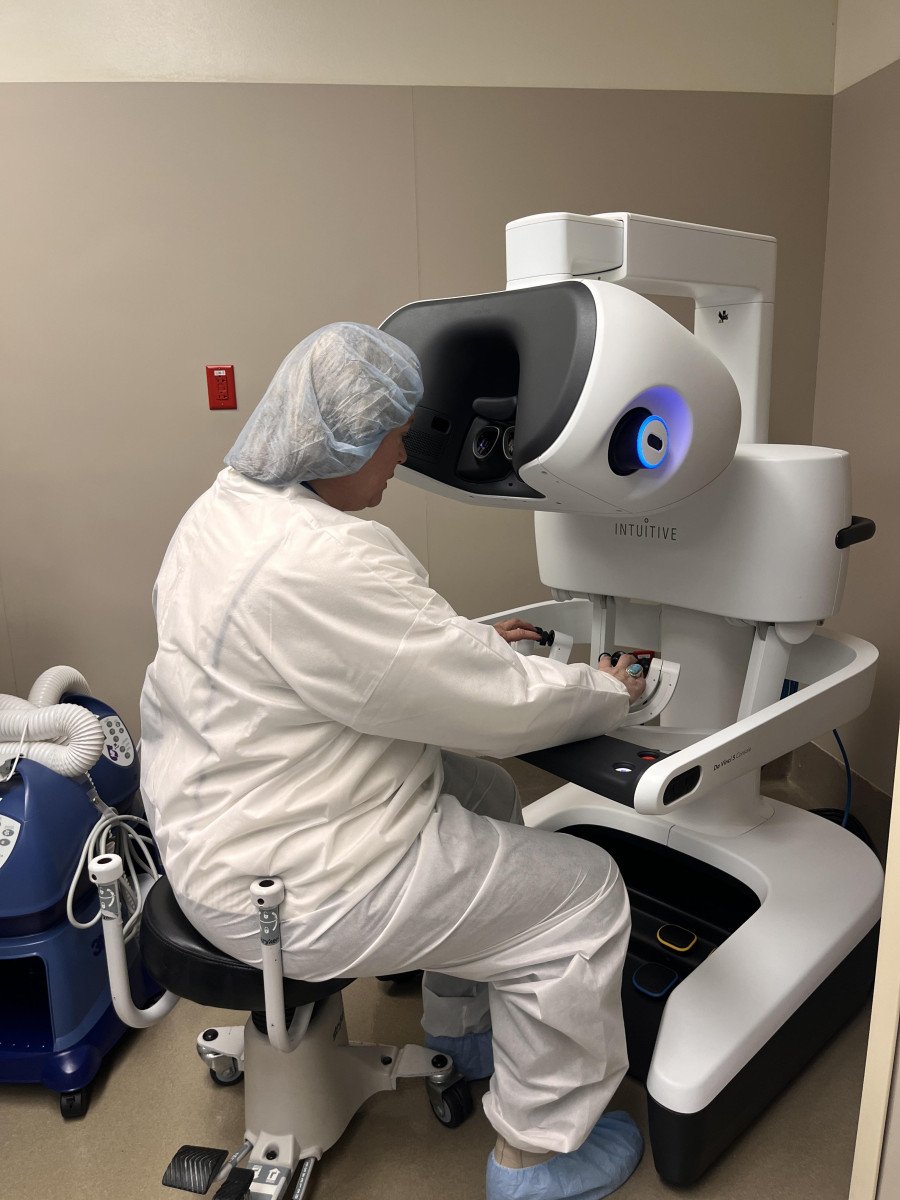
Dr. Bulter performed the operation using a minimally invasive surgery using the latest robotic technology that allows surgeons to remove her appendix, 21 lymphnnodes, and three feet of her colon.
“Her story is a powerful reminder of why screening matters, especially during Colon Cancer Awareness Month,” Bulter said. “Finding cancer early gives us more options, including minimally invasive robotic surgery, which reduces trauma to the body and helps patients recover more quickly. Maureen truly benefited from that approach.”
Despite the extent of the operation, Morgan said the recovery was far easier than she imagined.
“I can’t really say it was horrible pain,” she said. “I only needed one oxycodone in the hospital. After that, it was just an over the counter pain reliever.”
A self-described workaholic, Morgan was back to working a few hours from home shortly after returning from the hospital and has since transitioned back to working in the office. She continues to regain stamina and takes regular walks with her daughter and their dogs.
Her family, she said, played a vital role in her healing.
“My older daughter camped out here for two weeks,” Morgan said. “She knows her mama will try to do things she shouldn’t do. They were amazing, making sure I took my medicine and was eating enough.”
Morgan says her care team also made a tremendous difference.
“Dr. Bulter was amazing. My caregivers in the hospital were great,” she said. “I feel very blessed. I thank my family and thank the Lord that I’m still here.”
As part of Colon Cancer Awareness Month, Morgan hopes her story encourages others not to delay screening. Current guidelines recommend beginning routine screening at age 45.
“Just get screened,” she said. “Do an at home test or go for the colonoscopy. That few hours of discomfort could be worth your life. Get tested early and act quickly. Don’t let it sit.”