


Recognizing Stroke Symptoms: Why Intermountain Health Experts Say You Need to BE FAST When It Comes to Stroke
May is Stroke Awareness Month.
One in 20 adult deaths are due to strokes, strokes are the fifth leading cause of death in the United States. Stroke is a term that physicians use when a part of the brain is damaged because of a problem with blood flow.
Strokes can happen when:
- An artery going to the brain gets clogged or closes off, and part of the brain goes without blood for too long. This accounts for approximately 85% of strokes.
- An artery breaks open and starts bleeding into or around the brain.
The effects of a stroke depend on several factors including which part of the brain is affected and how quickly the stroke is treated.
For Bryan Maples, 40, from Riverton, Utah, he just didn't feel right last December.
"I didn't feel sick, I wasn't in pain," said Maples, explaining he mostly experienced weakness in his left side. He decided to be checked out at Intermountain Health Riverton Hospital.
"They let me know that I had had a stroke," said Maples. " I was lucky enough to get there as quickly as I did, as opposed to people that had all the symptoms and may have longer lasting effects."
“Quick medical treatment during a stroke is one of the most important factors in determining a good outcome,” said Jennelle Newman, NP, an advanced practice provider at Intermountain Health Neurology. “If a stroke does occur, there are treatments available to prevent long term brain injury but are very time sensitive.”
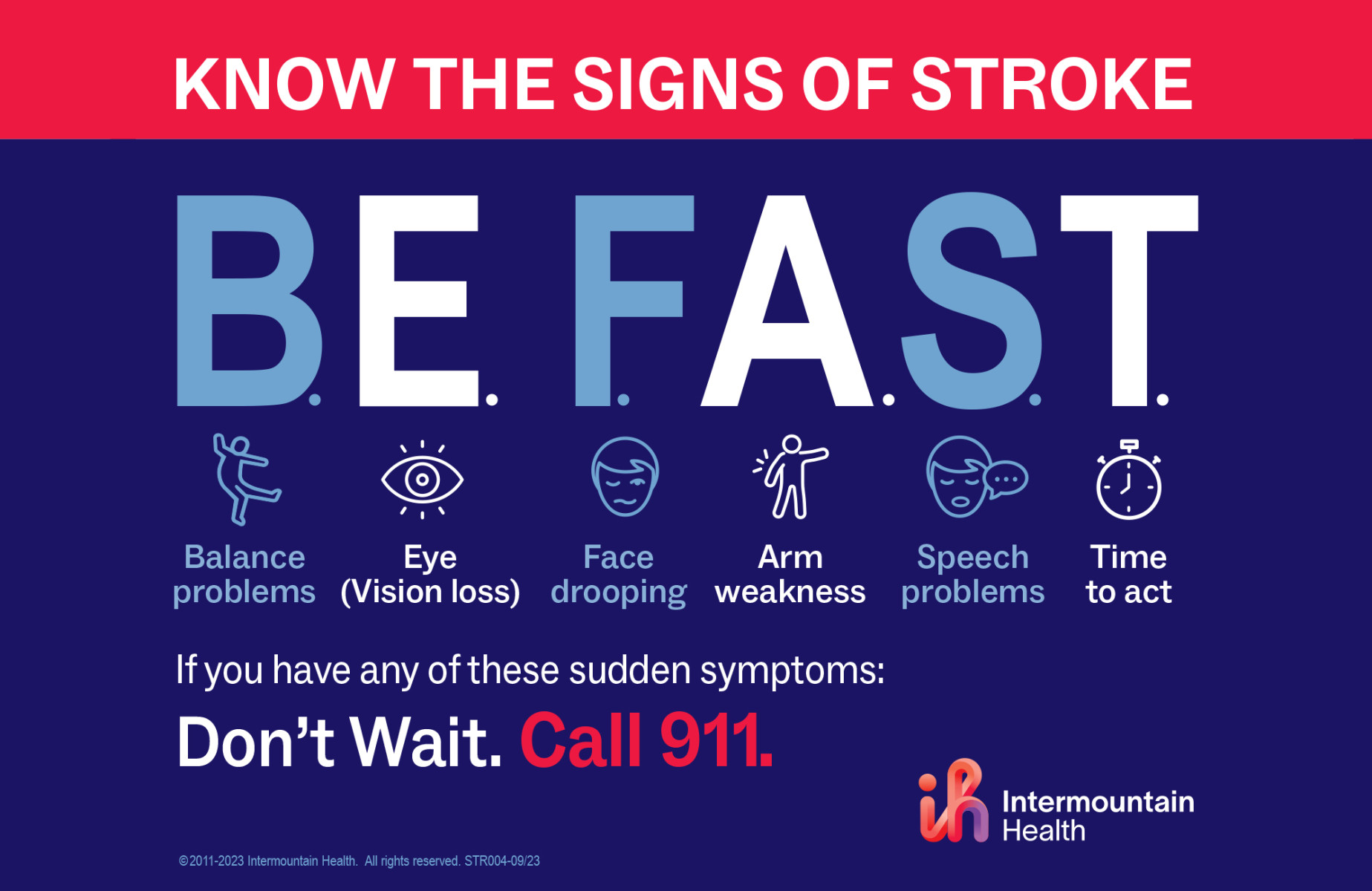
Newman says a simple way to remember the signs of stroke is to BE FAST:
- Balance: Sudden difficulty with balance or coordination
- Eyes: Sudden blurred or double vision, or loss of vision in one or both eyes without pain
- Face: Drooping or numbness on one side of the face
- Arm Weakness: Sudden weakness or numbness in one arm
- Speech: Sudden difficulty, slurring, or inability to speak
- Time: know when the last time you or your loved one had normal symptoms. Call 911.
The right treatment depends on what kind of stroke you are having. You need to get to the hospital very quickly to figure this out.
People should still call 911 and go to the nearest emergency department for rapid evaluation. Quick treatment during a stroke is one of the most important factors in determining a good outcome.
Stroke treatments are focused on restoring blood flow to the brain to prevent brain tissue from dying due to lack of blood flow.
Treatments include a blood clot dissolving medication called tPA and a procedure that uses a catheter to pull blood clots out of large arteries in the brain. Both treatments can significantly reduce disability but are very time sensitive.
Intermounain Health experts say many strokes can be prevented, though not all. You can greatly lower your chance of having a stroke by taking your medicines exactly as directed.
Medicines that are especially important in preventing strokes include:
- Blood pressure medicines
- Medicines called statins, which lower cholesterol
- Medicines to prevent blood clots, such aspirin or blood thinners
- Medicines that help to keep your blood sugar as close to normal as possible (if you have diabetes)
Risks for strokes can be partially genetics (or related to family history), but many risk factors are controllable through awareness and lifestyle changes. The number one stroke risk factor is high blood pressure. 80% of strokes in America are preventable. It’s important for everyone to know their risk factors.
Making lifestyle changes can also decrease your risk of stroke:
- Stop smoking, if you smoke
- Get regular exercise (if your doctor says it's safe) for at least 30 minutes a day on most days of the week
- Lose weight, if you are overweight
- Eat a diet rich in fruits, vegetables, and low-fat dairy products, and low in meats, sweets, and refined grains (such as white bread or white rice)
- Eat less salt (sodium)
- Limit the amount of alcohol you drink
- If you are female, do not drink more than 1 drink a day
- If you are male, do not drink more than 2 drinks a day
“It’s vital to remain optimistic and recognize that the goal is to recover from a stroke. If you believe you or a loved one might be having a stroke, BE FAST and call 911,” said Newman.
Scheduling an appointment now with a primary care provider for a regular check-up will help to discuss a plan to minimize potential risks.
###