


More Than Heartburn: Surgical Options at Intermountain Health Offer Lasting Relief for GERD Patients
For many people, heartburn is an occasional annoyance after a spicy meal or late-night snack. But for millions of Americans living with gastroesophageal reflux disease (GERD), the condition can become a daily struggle that affects sleep, comfort, and overall quality of life.
According to the American College of Gastroenterology, about 1 in 5 people in the U.S. has GERD. The most common symptoms are heartburn and regurgitation, or a feeling of fluid, food or stomach acid coming up into the chest or throat.
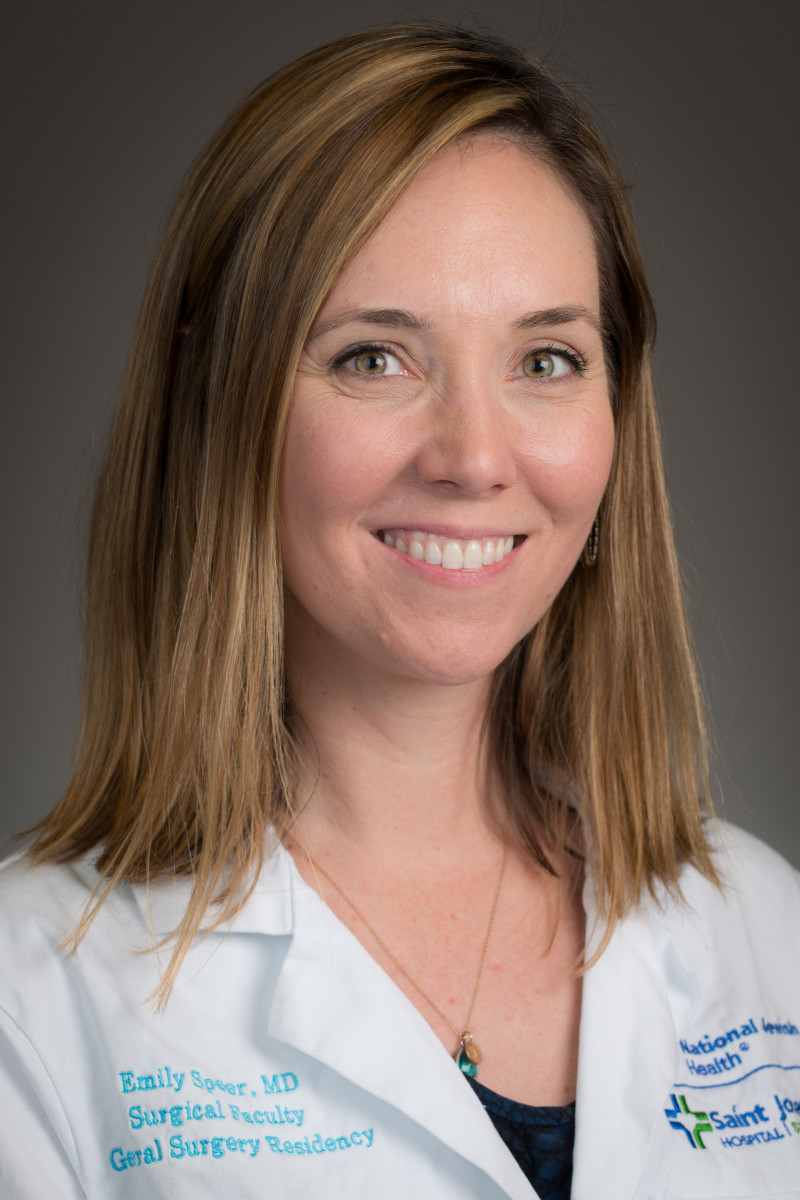
One concern with ongoing, active acid reflux that is poorly controlled or untreated is the risk of developing Barrett’s esophagus, said Emily Speer, MD, an Intermountain Health Lutheran Hospital surgeon who specializes in foregut and minimally invasive surgeries to treat reflux.
Barrett’s esophagus occurs when the normal lining of the esophagus is replaced with intestinal-like cells as a protection to ongoing acid in the esophagus. This change to Barrett’s esophagus is a risk factor for esophageal cancer.
While medications can help manage symptoms, Dr. Speer said many patients don’t realize that effective surgical options can address the underlying cause of reflux.
GERD occurs when the valve between the esophagus and the stomach doesn’t function properly, allowing stomach contents to flow back into the esophagus. This reflux can cause the familiar burning sensation known as heartburn, but symptoms often extend beyond that.
“Many people associate reflux with heartburn, but it can present in other ways,” Dr. Speer said. “Chronic cough, hoarseness, shortness of breath, and even chest pain that mimics a heart attack can sometimes be caused by reflux.”
Many GERD patients take proton pump inhibitors (PPIs) such as omeprazole or pantoprazole to reduce stomach acid.
While these medications can relieve symptoms, they do not stop reflux from occurring. Instead, they reduce the acidity of the stomach contents that flow back into the esophagus.
“Medications can make reflux more comfortable, but they don’t fix the underlying problem,” Dr. Speer said. “When we’re thinking about long-term solutions, we want to focus on stopping the reflux itself.”
Patients may benefit from a surgical evaluation if medications no longer fully control symptoms, if they have a hiatal hernia, or if they want to reduce or eliminate their need for long-term medication.
Many people are familiar with fundoplication, a procedure that has been used for decades to treat reflux. During the surgery, part of the stomach is wrapped around the lower esophagus to strengthen the valve that prevents reflux.
Some patients may qualify for incision-free procedures performed through a scope that help reinforce the reflux barrier without traditional surgery.
Another option is a procedure that uses a small ring of magnetic titanium beads placed around the lower esophagus. The device helps recreate the function of the body’s natural reflux barrier while allowing patients to swallow normally and have excellent reflux control.
Dr. Speer said the key is to match the right procedure to the right patient.
This is something Kathleen, a 78-year-old Montrose woman, learned.
She saw Dr. Speer after learning she had complications from a hiatal hernia, where the upper part of the stomach pushes through an opening in the diaphragm. In Kathleen’s case, it impacted her breathing and caused her to need supplemental oxygen. She also suffered from reflux.
Dr. Speer repaired the hernia and performed surgery to stop the reflux. Kathleen said she has not had any concerns with her oxygen levels or reflux since having surgery.
She connected with Dr. Speer over a common interest in their daily devotional readings and appreciated how easy it was to talk with the surgeon. “She was my angel.”
Before recommending treatment, Dr. Speer said patients undergo specialized testing designed to assess how the esophagus, stomach, and reflux valve are functioning.
“We don’t believe in a one-size-fits-all approach,” she said. “Our goal is to understand what’s happening anatomically and functionally so we can restore the system to normal as much as possible.”
The program also follows patients after surgery and measures outcomes to ensure long-term success. Patients undergo repeat testing about a year after surgery to confirm the repair is working as intended.
###