


Utah Man Saved During St. George Marathon Thanks to Quick Actions of Caregivers Running in Race Gives Thanks
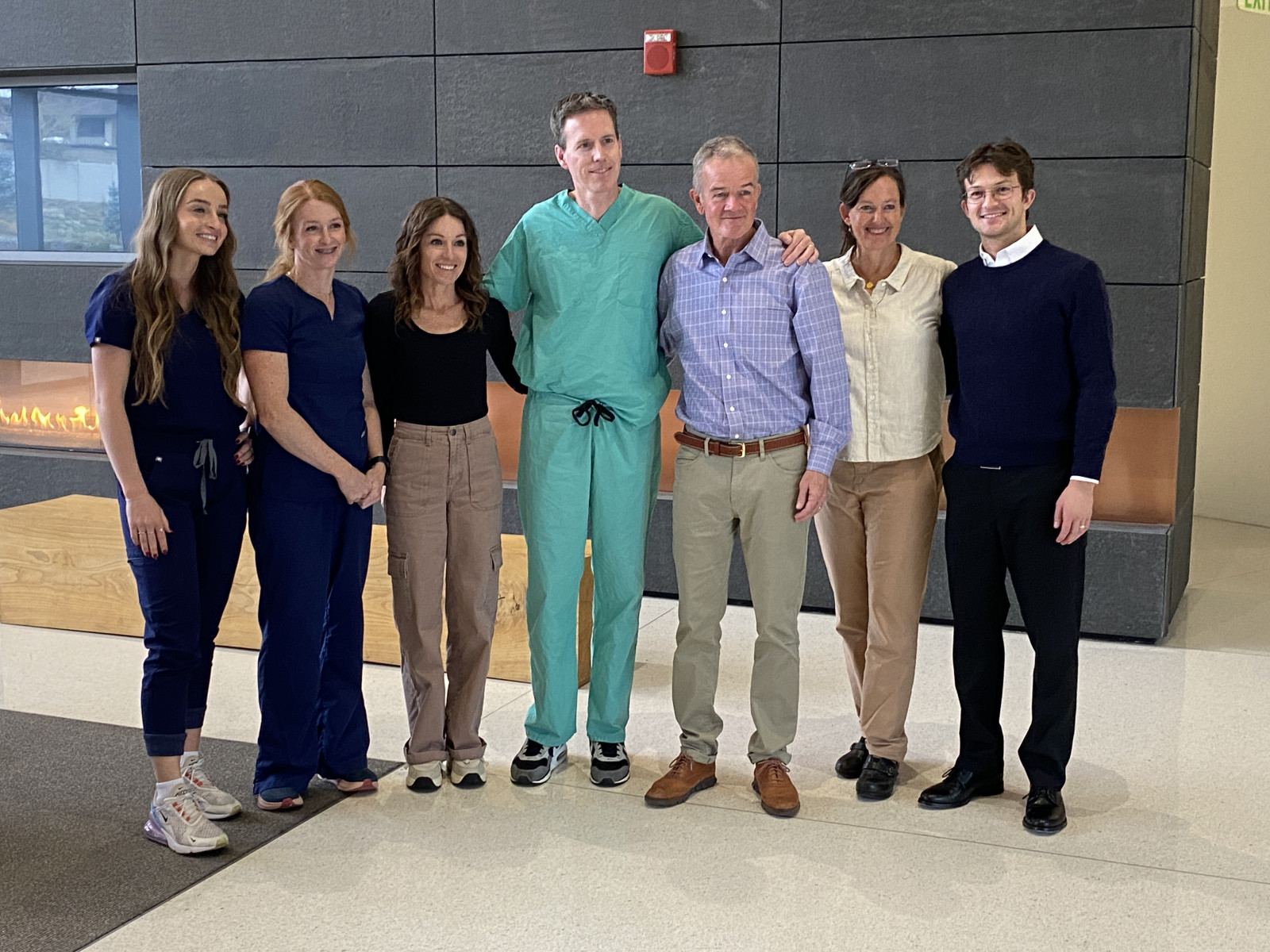
A Salt Lake man, who is a veteran runner and marathoner, is thankful to be alive after suffering cardiac arrest at the St. George Marathon on Oct. 5.
Dan Sorensen, 60, has run many marathons himself, but this time he and his son were there just to support and encourage friends during the last few miles of the St. George Marathon.
At mile 23, Dan and his son, Oliver Sorensen began running alongside their friend for a short time when Dan suddenly collapsed and fell to the ground. His son turned him over and found his dad unresponsive, his heart had stopped, and he had injuries to his face and knees.
Almost immediately, two Intermountain caregivers, Mike Henstrom, MD, an emergency medicine physician, at Intermountain Medical Center, and Julie Street, RN, nurse manager of the Intermountain Saratoga Springs emergency department, who were running in the marathon behind them, arrived upon the scene and jumped into action along with Katie Bradshaw Smith, RN, an emergency room nurse with MountainStar St. Mark’s Hospital who was also running in the marathon.
All of them relied on their CPR training. They provided CPR and medical support before the EMT ambulance crew arrived roughly eight minutes later, as the ambulance was nearby at the racecourse on standby to respond to any medical issues.
Dan and his family reunited with these caregivers on Tuesday at Intermountain Medical Center, for the first time since the incident.
“I didn’t think he was going to make it. It’s great to see him standing upright,” said Julie Street. “It’s so important to know how to do the basics of CPR that people can do until emergency crews and equipment arrive.”
“This kind of event drives home the importance of not only knowing CPR, but being able to start it promptly and have the confidence to do it effectively. Time equals brain. The faster you can get a person’s heart and lungs going, the better off the person will be,” said Dr. Henstrom.
Dr. Henstrom’s wife, Stephanie who ran the half marathon also assisted at the scene, as well as Brian Hales, MD, a retired anesthesiologist who ran the half marathon, and an unknown volunteer.
Dan was then transported in an ambulance to Intermountain St. George Regional Hospital with his wife, Jana, at his side.
That first day in the hospital, he wasn’t talking or responding at all and his six children all gathered in the hospital, including a daughter who flew in from out of state, fearing he might not make it.
He was hospitalized for five days. He does not remember much of what happened there. A physician told the family, that most people who experience this type of cardiac arrest do not survive, unless it occurs inside a hospital.
After he was stabilized at Intermountain St. George Regional Hospital, Dan was transported to Intermountain Medical Center in Murray where he underwent quadruple bypass surgery by cardiothoracic heart surgeon, William Caine, MD. He was in the hospital several days afterward. He is now home recuperating and doing well, sense of humor intact.
Dan and his family are forever grateful for those medical professionals who assisted on the scene.
“It really was just so unbelievable that these people were all there in that moment when I had stopped breathing,” said Dan.
“There are compassionate people and then there are skilled, compassionate people. It’s an interesting perspective to be the guy that was down on the road, and for people who were there to run a race, to sacrifice their time and use their medical skills during what were very critical moments for me. They gave me the chance to keep living. That’s pretty telling of the kind of people they are,” he added.
###