


Intermountain St. George Regional Hospital Adds Robotic Assisted Technology as Another Option for Total Knee Replacement Surgeries
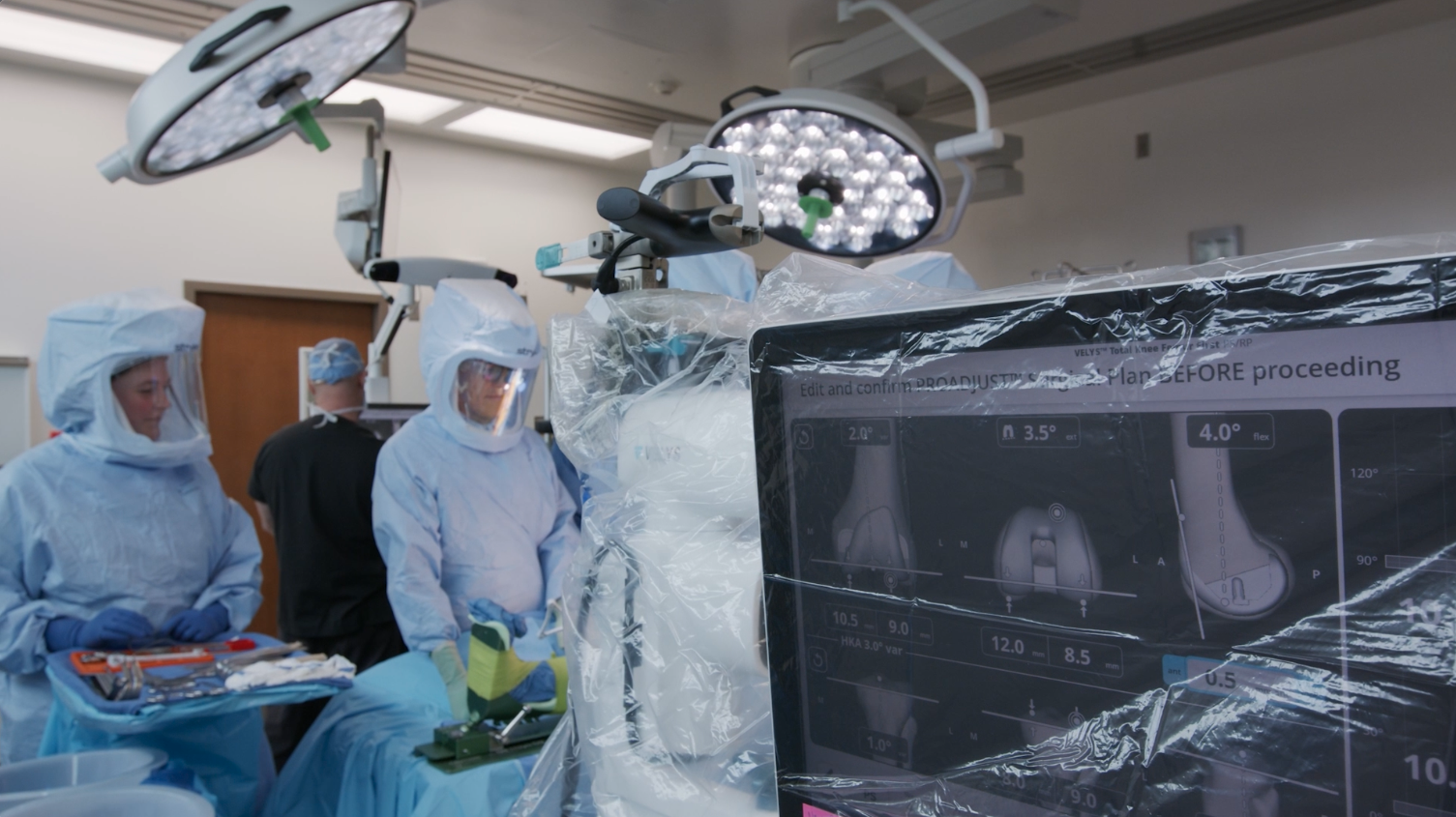
Intermountain Health is innovating orthopedic surgery in Southern Utah, adding robotic assisted knee replacement surgeries, where computer data is tailored to each patient’s anatomy in preparation for the surgery.
This cutting-edge robotic assisted technology gives surgeons and patients another option for orthopedic surgeries.
Intermountain Health's Southwest Orthopedics/Sports Medicine Clinic in St. George, Utah, is the first in the region to offer VELYS™ Robotic-Assisted Surgery for total knee replacements.
This new advanced surgery, introduced in St. George in November 2024, enables a more personalized, precise, and efficient knee replacement experience.
Orthopedic surgeons Robert Jamieson, MD, and Darin K. Allred, MD, were the first to use it complete more than 500 total replacements a year and more than 250 robotic assisted knee replacements to date.
“The key to this technology is it enhances the preparation and accuracy while also better customizing the care for each patient,” said Dr. Jamieson. "It allows us to really know the end from the beginning."
St. George resident Jay Sessions had the VELYS Robotic-Assisted surgery for his knee procedure in January 2025, and called the experience "pure joy".
Before the surgery, Sessions said his mobility was limited to the point where he would fall over, but since his procedure, he's felt no pain.
“Robotic-assisted total knee arthroplasty offers several significant benefits for patients undergoing joint replacement surgery," said Dr. Allred. “This advanced technology allows for enhanced precision during the procedure, enabling surgeons to plan and execute the operation with greater accuracy.”
The robot can identify minute differences in the patient’s knee and then assist the surgeons in aligning the implants more precisely to a patient’s unique anatomy, which can improve joint function and increase the longevity of the implant.
“Additionally, robotic assistance can result in smaller incisions, reduced soft tissue damage, and less post-operative pain,” said Dr. Allred. “These advantages often lead to quicker recovery times, shorter hospital stays, and better overall outcomes for patients.”
While the technology is a welcome addition to the orthopedic program, there are still surgeries being done with traditional means and those are discussed on a case by case scenario between patients and physicians.
Learn more about orthopedic needs and find providers at intermountainhealth.org.