


Intermountain Health Holy Rosary Cancer Center Saving Thousands of Miles of Travel for Patients in Eastern Montana
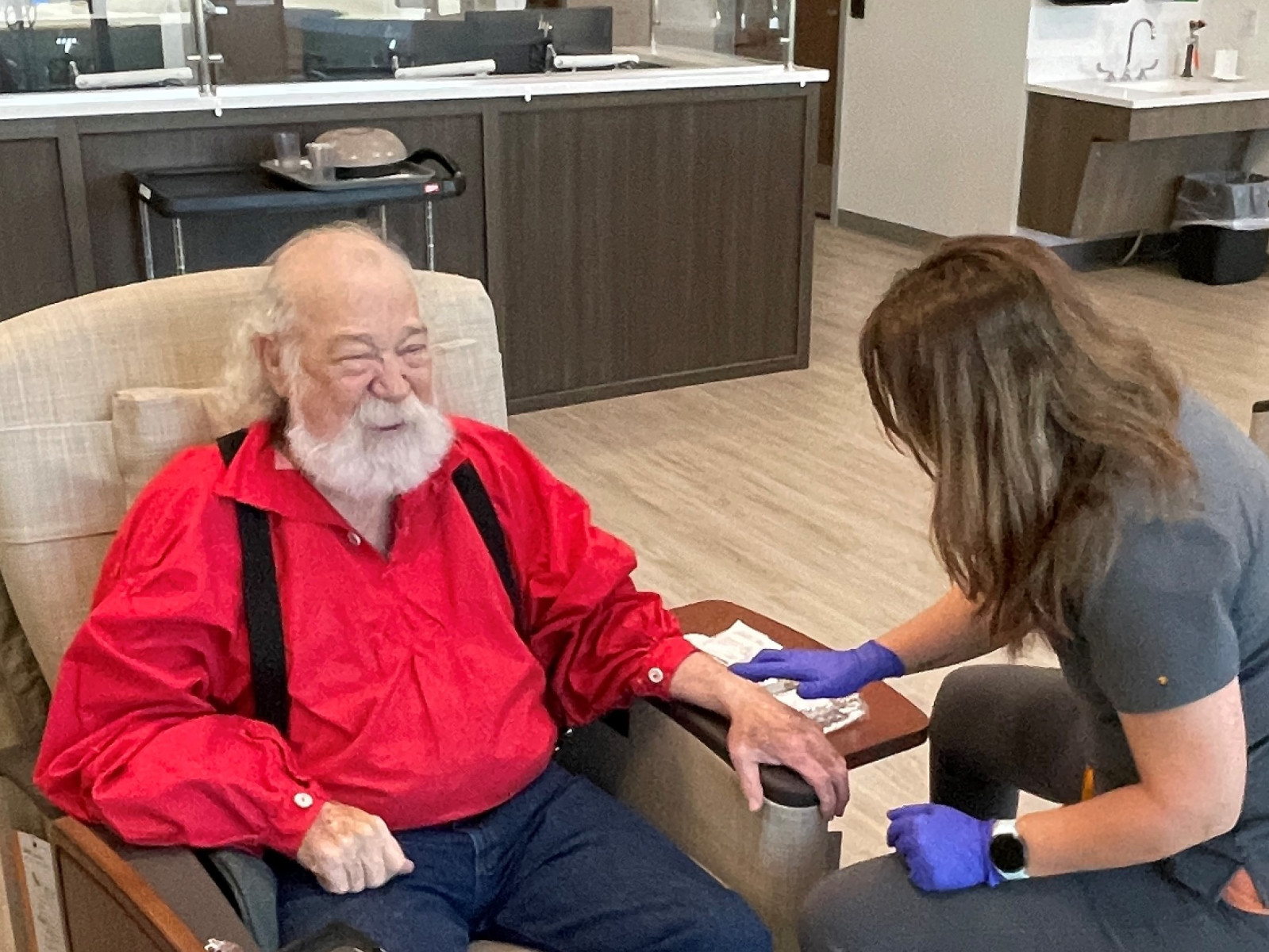
For Rod Beattie of Forsyth, Montana, the opening of the new Intermountain Health Holy Rosary Hospital Cancer Center in Miles City has meant more than just convenience; it’s been a lifesaver.
Beattie has been receiving cancer treatment for lung cancer at Intermountain Holy Rosary for nearly three years, beginning with infusion treatments at its previous center. He was grateful to have convenient access to radiation therapy after the new facility opened last September.
With the support of a $6 million grant from The Leona M. and Harry B. Helmsley Charitable Trust, Intermountain Holy Rosary opened the new center to offer radiation oncology services with the region’s only medical linear accelerator.
It is the only comprehensive cancer center within a 125-mile radius, eliminating distance and access barriers for rural patients, like Beattie.
Prior to the opening of the new center, patients in eastern Montana often faced long and potentially costly trips for radiation oncology treatments. Radiation treatments are generally daily treatments for several weeks at a time. Patients may have to choose to make a daily trip or spend weeks away from home.
“It was 120 miles round trip saved every time I did a (radiation) treatment in Miles City,” Beattie said.
Stories like Beattie’s are examples of the hospital’s mission in action according to Ben Uhlich, president and chief nursing officer of Intermountain Health Holy Rosary Hospital. In the year since opening, the center has continued to serve more patients than initially projected.
“We have exceeded our expectations, which really shows the need and the service we are providing in Miles City and to our surrounding rural communities,” said Uhlich.
To demonstrate the impact that the center has had on community members, Uhlich shares that he estimates that the center has saved nearly 300,000 miles of driving for patients and families.
And Intermountain Holy Rosary continues to look for ways to make care more accessible for patients facing cancer diagnosis and treatment.
Recently, the hospital has begun providing PET-CT scans monthly, through a mobile unit at the hospital. A PET-CT scan is an advanced imaging tool that helps doctors detect cancer, monitor its spread, and assess how well treatment works, allowing for more precise and personalized care decisions.
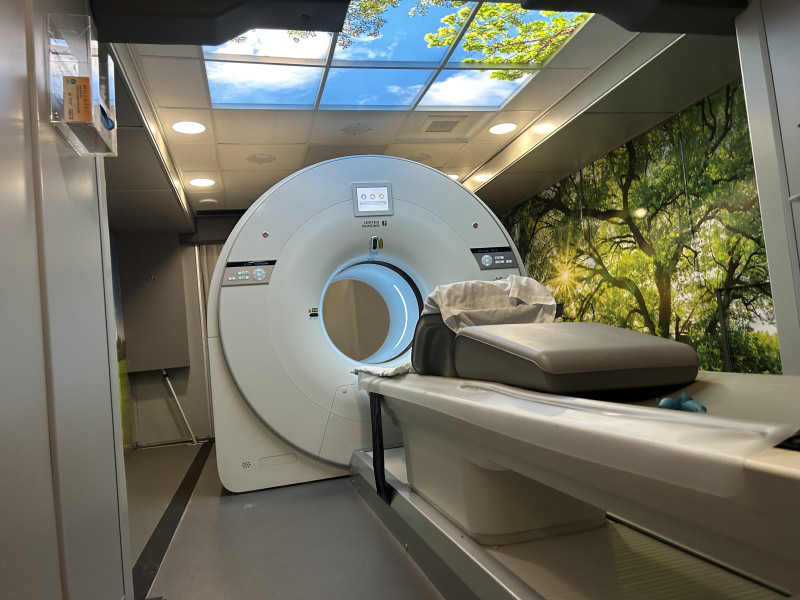
Beattie was one of the first patients to receive critical imaging locally. He was planning to travel to Billings for the scan, when he received a call from the cancer team at Holy Rosary. “Two days before (the appointment in Billings), they called and said they could do a PET scan here. We were tickled to death,” he shared.
Beyond the new radiation therapy equipment, the patient-centered design of the new facility, including expanded infusion areas and dedicated exam rooms, has made a difference for Beattie and others.
“All I can say is that I have gotten better treatment than I ever expected. I love the center,” he said. “If you’ve got to do this, at least make it comfortable, and they have.”
His feelings extend to his care team as well. The staff, whom Beattie affectionately calls his “flock of angels,” have become like family. “They treat me like I’m a prince,” he said. “(They provide) as good of healthcare as a guy can expect to have.”
Telemedicine has also played a role in keeping Beattie’s care close to home as well, allowing him to consult with his oncologist in Miles City as well. “I prefer looking at him through a camera screen. That means I don’t have to travel,” he said.
After a year since the opening, Uhlich believes the center is delivering its commitment for patients like Beattie. “We believe that your ZIP code shouldn’t determine your access to high-quality care,” he said. “We have been able to serve even more patients, creating equitable cancer care for the region and especially in our rural communities.”