


Intermountain Health Primary Children’s Hospitals Providing Free Safe Infant Sleep Consultations to More Families in Utah Communities
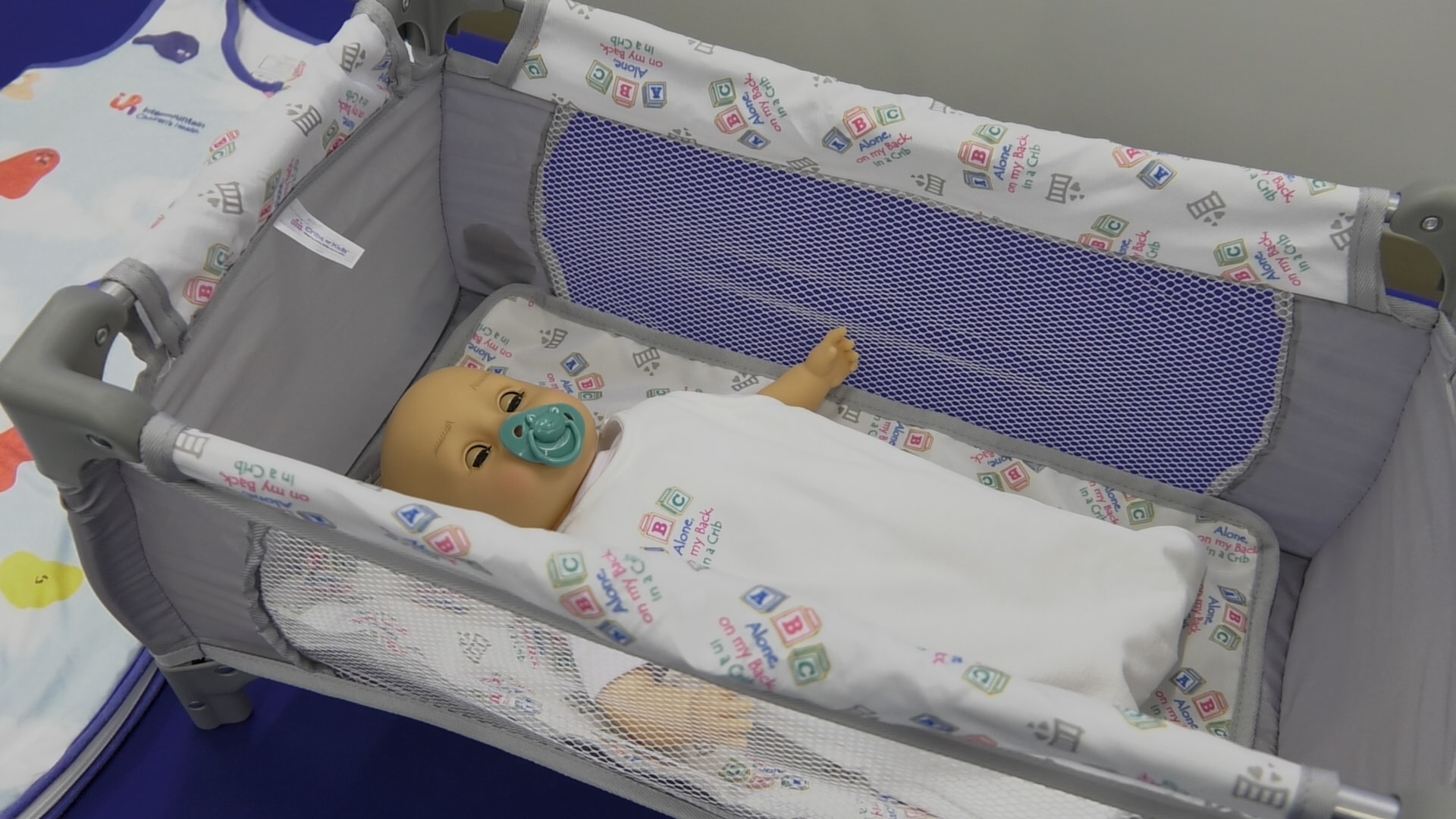
To help parents reduce their risk of having an infant die unexpectedly while sleeping, Intermountain Children’s Health recently launched a new Safe Infant Sleep program to support families with infants with free safe sleep consultations from certified safe sleep ambassadors.
Anyone in the community can receive a free consultation at either of two Intermountain Health Primary Children’s Hospital locations: the Larry H. & Gail Miller Family Campus in Lehi or the Salt Lake Campus.
In Utah, approximately 27 babies die each year before their first birthday from Sudden Unexpected Infant Death (SUID), according to the most recent state report. These deaths take more infants' lives than any other cause, and 93.5% occurred in an unsafe sleep environment.
The new program makes more hands available to teach parents about safe infant sleep. Newborn caregivers at Intermountain Health hospitals will continue to teach new parents about safe sleep before newborns go home for the first time.
“It can be difficult and exhausting to be a new parent, but the first year is a critical time for babies and it’s when they’re most at risk for a sleep-related infant death, so it’s important to create a separate, safe sleep space for your baby,” said Dr. Jessica Davidson, medical director, Neonatal ICU, Intermountain Medical Center and chair of the Neonatal Committee of the Utah Women and Newborn Quality Collaborative.
“Room sharing with your infant helps you attend to their needs, but the data shows bed sharing with your infant puts them at risk for a sleep-related death,” said Dr. Davidson.
What used to be called Sudden Infant Death Syndrome (SIDS) is now called SUID. Since 2009 the U.S. Centers for Disease Control and Prevention has been collecting and monitoring data through the SUID case registry to help understand the factors that may affect the risk of SUID. Utah joined the registry in 2019. Now, 32 states and jurisdictions are included in the registry.
For Lizbeth Hernandez, infant loss is deeply personal. About 12 years ago, she had one of her infant twin girls die suddenly in the middle of the night when she got up to feed them.
“When I picked up Carla Sophia, she wasn’t breathing. She was rushed in an ambulance to the emergency room, with a faint heartbeat, but they couldn’t revive her. She was just six weeks old when she passed away,” said Lizbeth Hernandez, who works as senior practice manager in maternal fetal medicine at Intermountain Medical Center.
At the hospital, one of the technicians came out of the room crying. The doctor came over to Hernandez and apologized and said there’s nothing they could do.
“The feeling when I heard the news was like an internal burning sensation. I felt angry at the world. It was so hard. I removed myself from everyone,” said Hernandez.
“Eventually, I was able to have an autopsy performed, which showed the death was unexplained, which helped me realize there was nothing I could have done differently that would have saved her,” she added.
Hernandez’s other daughter, the baby’s twin sister, is now 12 years old and is a reminder of how long ago they lost Carla Sophia.
Hernandez has a meaningful career in healthcare. Recently, she helped develop care processes for a Pregnancy After Loss Clinic at the Intermountain Medical Center campus for moms who’ve lost an unborn baby or newborn and need support as they become pregnant again.
The clinic is a safe space designed with their medical and behavioral health needs in mind, and caregivers allow them to work through their grief and help them feel a sense of hope.
Although some causes of these infant deaths are simply unexplained like Hernandez’s daughter, what the data does show is that almost all of these deaths happen during sleep. Since 1994, experts have recommended having infants sleep on their backs to reduce their risk of infant death. Yet, that is not enough.
The Utah and national data show soft bedding, bed sharing, or not sleeping in a crib, are unsafe sleep factors. The data suggests parents share a room, not a bed, for the first six months.
“We help educate new parents that the safest way for infants to sleep is on their backs in a no-frills crib with just a firm, flat mattress and a fitted sheet. It’s very important to keep the space clear of any soft items such as loose blankets, bumpers, pillows, or stuffed animals, as they could cause unintended suffocation,” said Danielle Chunglo, community health coordinator at Primary Children’s Hospital.
The American Academy of Pediatrics and Intermountain Health Children’s Health pediatricians and certified safe-sleep ambassadors recommend parents follow the ABCs of safe sleep. Place baby Alone, on their Back, in a Crib, bassinet, or portable crib.
“It’s recommended that parents and infant caregivers move baby from car seats, swings, bouncers, couches, or adult beds to a crib, bassinet, or portable crib for sleep. Parents and other caregivers should be alert and substance-free during care and sleep times,” said Chunglo.
Free Safe Sleep Consultations are available at two locations:
Intermountain Health Primary Children’s Hospital, Larry H. & Gail Miller Family Campus
2250 N. Miller Campus Drive, Lehi, Utah.
Monday through Friday from 11 a.m. to 4 p.m.
Intermountain Health Primary Children’s Hospital, Salt Lake Campus
100 Mario Capecchi Drive, Salt Lake City.
Monday through Friday from 9 a.m. to 4 p.m.
Families can call 801-662-2277 to schedule a free Safe Sleep Consultation with a certified infant sleep expert. This phone number can also be used to schedule a car seat check with a trained child passenger safety technician. Visit the Children’s Health safe sleep page at intermountainhealth.org for more resources.
###