


Child Safety Advocates Raise Awareness About Rise in Number of Counterfeit Car Seats Bought Online
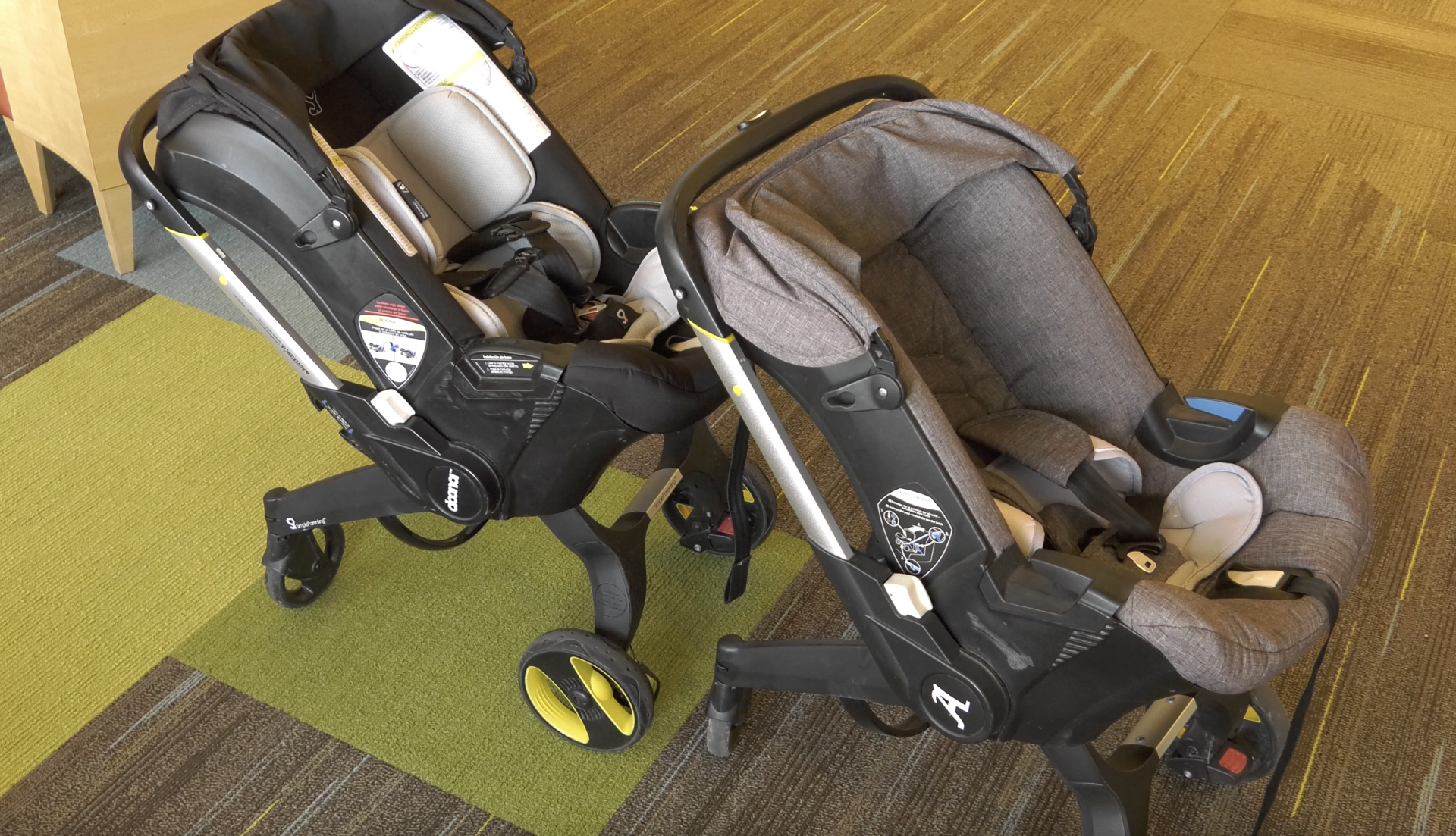
Child safety advocates at Intermountain Children’s Health are seeing a rise in the number of parents unknowingly purchasing counterfeit car seats online for their children. Today, advocates from Intermountain Health, the Healthy Living Institute at UMC, and Safe Kids Clark County spoke on this dangerous rise and keeping kids safe in vehicles.
These types of seats are almost always purchased online and are enticing because of the steep discount in price compared to major brands. What often confuses parents is that these seats are found on the websites of major national retailers through third-party sellers.
“It’s hard to tell a car seat is counterfeit from a small picture online, and many parents think they found a great deal from a major retailer,” said Michelle Jamison, community health program manager at Intermountain Primary Children’s Hospital. “Once they realize there’s a problem and try to return it, the site they got it from has already been taken down.”
For many years, Intermountain Primary Children’s has offered both in-person and virtual car seat checks to help educate parents about proper installation and correct use of car seats.
Jamison says that’s where caregivers started noticing more of these counterfeit seats popping up.
The types of counterfeit car seats caregivers are starting to see more of look legitimate and can cost hundreds of dollars. But many of these are missing key components that keep children safe in a crash, and they worry that using these seats could have deadly consequences.
They say the best way to avoid counterfeit car seats is to buy directly from the manufacturer’s website or go to a store in person to purchase the seat. All these models will be legitimate and meet safety standards.
“Parents may think an in-store purchase is more expensive but what they’re really getting is the peace of mind their child’s car seat is safe,” said Jamison. “While some models are pricey, there are less expensive ones that are still crash tested and safe.”
There are several things required on car seats to meet stringent federal safety standards, and parents should look closely to see if any are missing to know if it’s counterfeit.
All car seats are required to have a manufacturers label which includes the name of the car seat, date of manufacture, branding, model number, and expiration date.
This information is used to help register your car seat, which allows manufacturers to notify you of any recalls. Counterfeit car seats don’t have the number and make it ineligible to register.
“Thank goodness we have only seen this a few times, but we really want to make the public aware that this could happen. If you have any questions, you can bring your car seat to one of our local car seat check up events and have it checked by a certified technician. You can find these events by looking on our website at safekidsclarkcounty.org,“ said Jeanne Marsala, executive director of Safe Kids Clark County.
“We also want to remind parents that 8 out of 10 car seats are also installed improperly, so you should always have your seat checked by a certified Child Passenger Safety technician,” Marsala added. “In the last few months, we have seen a rise in serious car crashes involving children. We are finding that in many of these the child has been graduated to the seatbelt prematurely. In other words, they were at an age, weight and height where they should have still been seated in a booster seat. In addition, some of the seatbelt age children have put the shoulder belt portion behind their back or under their arm. It is extremely important for the children to always wear the seatbelt going across their chest to give them optimum protection.”
Parents and caregivers can also schedule complimentary car seat inspections and installations with the Healthy Living Institute at UMC.
The Healthy Living Institute at UMC houses one of the largest car seat programs in Nevada, assisting up to a hundred families per month with vital passenger safety education among other injury prevention programs.
“In addition to the typical installation mistakes, we are starting to see a greater number of these counterfeit and foreign car seats,” said Amy Runge, clinical manager of the Healthy Living Institute at UMC.
“As home to Southern Nevada’s only designated pediatric trauma center, UMC Children’s Hospital sees an alarming amount of children severely injured each year because they are not restrained properly. We are proud to have a robust car seat program with certified passenger safety technicians to assist families both inside the children’s hospital and through daily appointments at the Healthy Living Institute,” Runge added.
To meet safety standards car seats in the U.S. must also include warning labels written in both English and Spanish. They can be found on the back of the car seat but are also required in the area near where the baby’s head goes at the top of the seat.
Counterfeit car seats are often missing the labels, or they’re written in another language. Sometimes these labels have grammatical errors, and the wording doesn’t make sense.
Experts note a missing chest clip is an immediate sign a car seat isn’t safe. They’re required in the United States but not in every country, which is why counterfeit seats usually don’t have them.
“If you determine that you have a counterfeit car seat, stop using it immediately and contact the retailer to notify them that they sold a counterfeit,” Jamison said. “You may be able to recover the cost of the seat if you used a credit card or purchased through a major retailer.”
Parents can also report it through STOPfakes.gov, the National Highway Traffic Safety Administration (NHTSA) or the U.S. Department of Commerce via their contact form.
They should also submit a report through their state’s consumer protection agency.
For help with evaluating or installing your car seat, find a technician near you, schedule an appointment with the Healthy Living Institute at UMC by calling 702-383-SELF or attend a Safe Kid’s event at safekidsclarkcounty.org.
For more child safety tips, go to intermountainhealth.org/childrenshealth.
###