


Montana Cancer Survivor Treated at Intermountain Health Encourages Screening, Shares Hope Ahead of Celebrate for Life Event
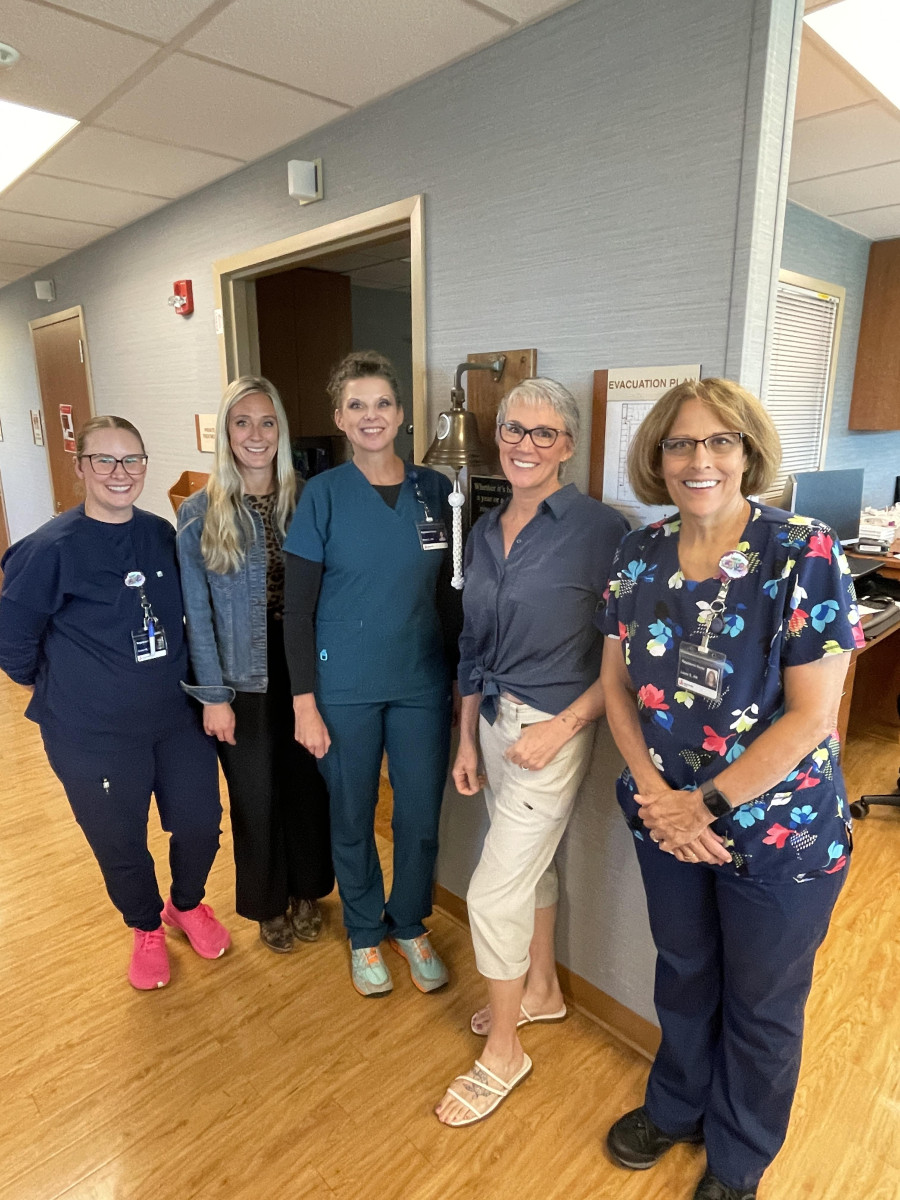
When Jo McGullam of Billings, Montana, visited her doctor because of symptoms she thought were related to menopause, colorectal cancer was not something she expected to find.
Her doctor encouraged her to complete a stool test. When the result came back positive, McGullam followed through with a colonoscopy.
After the procedure, her doctor delivered unexpected news.
“There was a little, tiny polyp and a great big mass,” McGullam said.
She was diagnosed with stage 4 colorectal cancer and began an aggressive treatment plan intended to pursue a cure.
Her care moved quickly. McGullam completed bloodwork, followed by a CT scan and an MRI.
Imaging also found a mass on one of her ovaries. Because her case did not follow a typical pattern, her Intermountain Health physicians presented it to a multidisciplinary group of physicians to help determine the best course of treatment.
Her treatment would be intensive. Surgery came first, followed by 18 weeks of chemotherapy and five and a half weeks of radiation therapy.
“I was kind of in the mind frame of, ‘Give me a plan so I can focus on it, and tell me what I need to do,’” McGullam said.
McGullam said the attention she received from her caregivers made her feel more than a diagnosis. During her months of treatment, one of her physicians told her that she had awakened during the night thinking about how best to move McGullam’s treatment forward.
“To have a doctor be that involved in my case was really nice,” McGullam said. “They treated me like I was their sole responsibility. I felt like I was the only patient.”
That same sense of support continued throughout her treatment at Intermountain Health.
McGullam said kindness extended across the entire care team.
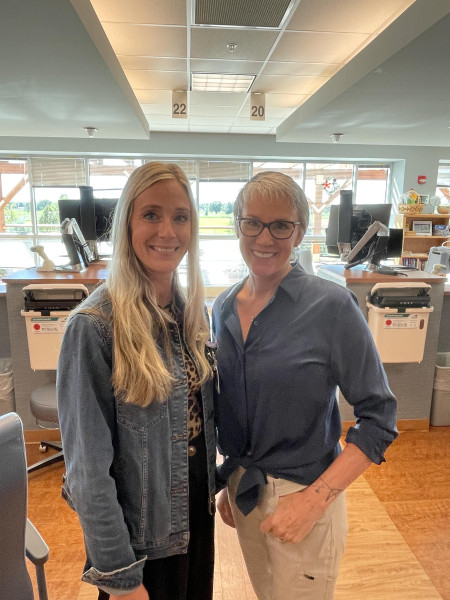
“There was not one single person who was not kind and caring,” she said. “I felt like I was the focus, even though they had a full room of people they were treating.”
She completed treatment in December 2025. Follow-up scans in January and July 2026 showed no signs of metastatic disease. Her physicians will continue monitoring her with CT scans and follow-up appointments every six months.
Her recovery has brought some life changes. McGullam, who worked as a dental hygienist before her diagnosis, stepped away from the profession because of physical demands during treatment. She is now beginning to find what she calls her “new normal.”
“I didn’t know how bad I felt until I started feeling better,” she said. “Right now, I’m enjoying just living my life and keeping up with the day-to-day for my family.”
Her experience has also made McGullam an advocate for cancer screening. She did not have symptoms she associated with colorectal cancer or a family history of the disease.
“If my doctor hadn’t talked me into the colonoscopy, I don’t know where I would be right now,” she said. “People are resistant to getting checked and having a routine colonoscopy because of fear, but I think everybody should do it. The best thing for them to find is nothing. But if they find it sooner, it’s easier to treat, and you don’t have to go through as many things as I did.”
Her story reflects the spirit of Yellowstone Celebrate for Life, formerly known as Relay For Life of Yellowstone County. The event, which will be held Saturday, Sept. 12 in Downtown Billings, recognizes cancer survivors and caregivers while honoring those who have died from the disease and supporting everyone whose lives have been touched by cancer.
Intermountain Health is proud to support Yellowstone Celebrate for Life and stand alongside survivors like McGullam, whose journey highlights both the importance of early detection and the hope that can be shared during a difficult cancer journey.
For people who are beginning their own cancer treatment, McGullam offers a message grounded in the approach that carried her through treatment.
“It’s not a death sentence. It’s a plan,” she said. “If you follow the plan and stay positive, it helps along the way. You have difficulties, but if you look at the positive each day, it helps you get through the difficult times. You choose to be positive, and that helps with recovery.”
###