


One Woman's Story: A Reminder to Prioritize Screenings, Self-care, Self-Advocacy
For years, Bette Kidane did what many healthcare professionals recommend: She kept up with her annual mammograms. Since age 40, breast health screenings have been part of her regular routine, something she made time for year after year.
But last year, life became exceptionally busy. As Intermountain Health’s Revenue Cycle Learning and Development director, Kidane and her team were in the middle of the major, all-hands-on-deck medical record systems implementation. With so much happening at work, she did what many people do when schedules are full, and responsibilities feel urgent— she delayed her own care.
“I was just too busy to fit in my regular maintenance and self-care,” said Kidane. “I kind of put it off. Not completely, but I probably put it off longer than I should have.”
By the time Kidane went in for her mammogram, she had felt a small lump. The screening detected something that required a closer look, leading to a diagnostic mammogram, then an ultrasound. What initially felt routine quickly became more urgent.
At first, she wasn’t alarmed. She had been called back for additional imaging in the past. But after the ultrasound, the care team told her the finding looked highly suspicious and that she needed a biopsy immediately. When Kidane mentioned an upcoming work trip related to the implementation of the system, a nurse at the Breast Care Center made the seriousness clear.
“She said I needed to do this immediately, and I asked her if she meant canceling my work trip,” Kidane said. “And she said, ‘Yes, we need you to come in on Monday.’ At that point, the whole room just kind of stopped.”
Kidane had a biopsy that Monday. The next day, her primary care provider called with the news that the tumor was malignant. She was diagnosed with HER2-positive breast cancer and referred to oncology.
The diagnosis brought a wave of uncertainty. She wondered how to tell her spouse, what to say to her children, and how to prepare for the months ahead.
“The world kind of falls in on you,” she said. “Like, oh my God, what do I do next?”
Soon, Kidane was surrounded by a care team that helped her move from fear to action. She met with an oncologist, nurse practitioner, triage nurses, nurse navigator, financial advocate, genetic counselor, dietician and other support professionals. The number of calls and appointments was overwhelming at first, but it also reminded her she was not facing cancer alone.
“I have felt so, so very grateful and fortunate,” Kidane said. “I have a wonderful, caring family. I have a great job. I have a supportive leader. I have a supportive team and coworkers. I have an amazing care team.”
Kidane began six rounds of chemotherapy in November, with treatments spaced three weeks apart through February. She later had a lumpectomy, and the results showed the treatment had been completely successful, with no residual cancer found. She still remembers where she was when she received that call.
“I was in the grocery store when my surgeon called me,” she said. “I was in the cereal aisle, and I just remember shouting, ‘Yes!’”
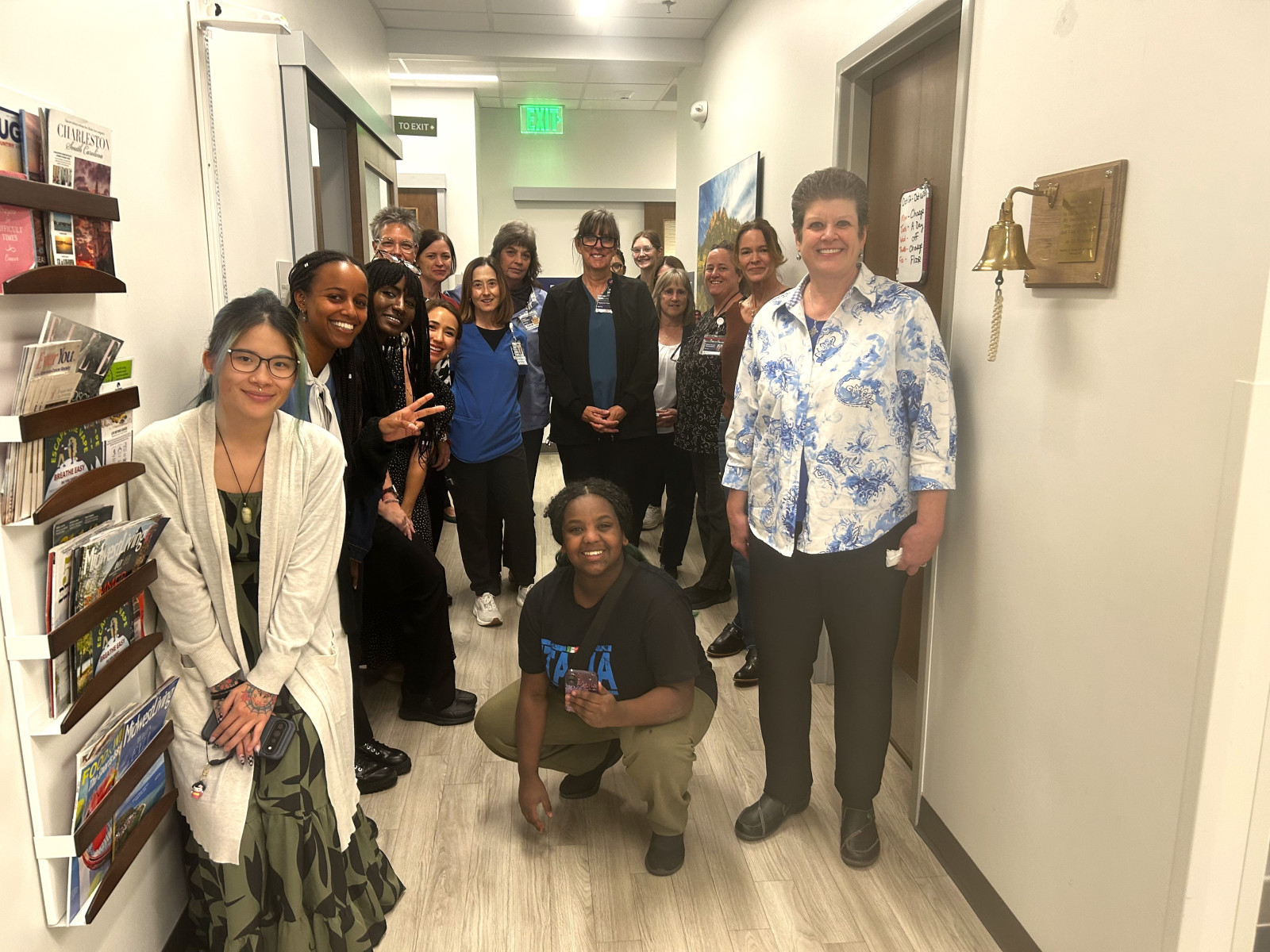
Although that moment was joyful, her treatment continued. After surgery, she went through radiation and additional targeted therapies designed for her specific type of cancer. Her final treatment was on Oct. 12, a milestone she celebrated by buying lunch for the team at the cancer center and ringing the iconic cancer bell.
Throughout her care, Kidane said the compassion and responsiveness of her team made a lasting impact. When appointments needed to move faster, her nurse navigator advocated for her. When she had questions, members of her care team helped her understand what to expect. During chemotherapy, the nurses brought warmth and encouragement to a difficult experience.
I have learned over the past year that if I see something unusual, I need to get it checked out right away. I don’t want to wait again and put something off.

“I have been taken care of so well, and I am proud to say that I work for such a great organization,” Kidane said. “Everybody has been very supportive and provided me with all the resources I could need.”
She especially remembers the nurses who cared for her during chemotherapy. “The nurses are so great,” she said. “They made it fun for me to go in for my chemo. I never anticipated anything in this being fun, but they made it something to look forward to.”
Kidane’s experience also changed how she thinks about self-care. Before her diagnosis, she understood the importance of preventive care in theory. Now, she feels it personally. She knows how easily a busy schedule can become a reason to delay an appointment, and how important it is to resist that impulse.
“I have learned over the past year that if I see something unusual, I need to get it checked out right away,” she said. “I don’t want to wait again and put something off.”
Her message is simple but powerful: Early screening and detection matter. So does listening to your body, asking questions, following up when something does not feel right, and making your health a priority even when work, family and life feel demanding.
For Kidane, the journey also reinforced the value of family, support and choosing joy. She has prioritized travel, celebrated milestones and embraced meaningful moments with the people she loves. She recently took what she calls her “kicked cancer cruise,” visiting Greece, Crete, Malta and Sicily.
“Prioritize the things that you want to do and experience in your life because you never know what’s going to happen,” she said.
Kidane said she now feels great. Her appetite is back, she can taste food again and her hair has started to grow back. But the lessons from the past year remain close. Keep up with screenings, do not ignore symptoms, accept help and advocate for the care you need.
“My tumor grew from ‘undetectable’ to stage two in a little over one year,” she said. “If I had been earlier in this whole thing, I maybe would have just been stage one. I don’t know. But I do know now not to wait.”